

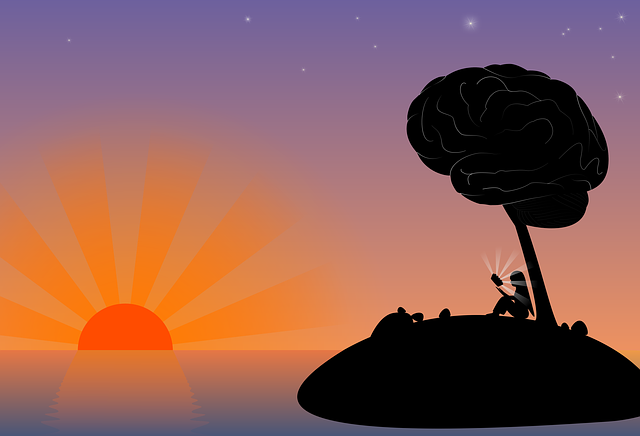
It’s a simple fact: Our thoughts affect our mood. And it’s easy to understand why.
Take this moment to notice your mood. How are you feeling? Now, take a moment and observe your thoughts. What are you thinking?
If you are feeling happy, your thoughts are most likely in the happy category. If you are feeling anxious or stressed, then your thoughts are most likely causing you to have anxious or stressed thoughts.
Thoughts affect our mood. When we think better thoughts, we feel better. Sounds easy, right? Well, it might take a few sentences to explain, but it’s actually hard work.
You can improve this in a number of ways, including therapies such as hypnotherapy, as well as simply making a change in how you think of yourself. It’s this which we are going to be looking at here in some detail.
Thinking our way to feeling better means we make a conscious decision to essentially change how we think about ourselves and the situations we are in. The deeper the negative roots are, the harder it can be to rip them out for good—but it can be done.
Here’s how to start.
Step 1: Track your mood and thoughts each day and write them down. Keep a journal or use your phone. The important thing is to collect your data.
How are you feeling and what are you telling yourself based on that emotion you are experiencing? Start making the connections.
Example: You’ve tracked your mood and observed your thoughts for a few days, and you notice that your dominant emotion is anxiety. Your thoughts are filled with “what if” thoughts:
“What if I can’t get this done on time and my boss fires me?”
“What if this actually does not work out the way I had hoped?”
“What if I make a mistake? I’m going to look stupid.”
“What if I don’t know how to do what’s asked of me, and people realize that I’m not as good as everyone thinks I am?”
I could go on and on with examples of anxious thoughts, but you get the idea. Anxiety creates doubt. If doubt gets in the room, it snowballs and attempts to take up our entire house.
Now that you have data on your emotions and the thoughts connected to those emotions, you can move on to the next step.
Step 2: As you track your thoughts and emotions about yourself or a situation, I want you to ask yourself:
“What would I tell my best friend if they were saying this to themselves? Would I say the exact same thing about them? Or would I offer a different perspective and probably be more kind?”
We are our own worst critics, so most often we wouldn’t dream of saying what we say to ourselves about ourselves to someone else. My guess is you would probably be more realistic and kind to your friend.
Example: Let’s say you think:
“What if I make a mistake? I’m going to look stupid.”
Now, in response, ask yourself this: “If my friend came to me saying that, would I tell that friend, ‘Yes, I hate to tell you this, but if you make a mistake that means you are stupid.’?” Seems pretty harsh and untrue. What might you say instead?
Maybe you’d tell them how making mistakes is how we learn. Or you could remind them that people make mistakes all the time and that in no way do those mistakes define who they are. Or you’d remind them that they’ve been in positions where they did not know something before, and they figured it out. This time is no different. You’d tell them: “You got this!”
Now that you have data and evidence that there is more than the first perspective, you are forced to see alternative ways of looking at your own anxious situation. Now give yourself the same responses you would give your friend. It might not feel as true as it does saying it to someone else, but you have to admit your first viewpoint is not the only answer.
Notice how different these two interpretations of the same situation can be. Notice how you feel taking the first approach compared to the second.
When we are able to create different perspectives, we give ourselves an opportunity to see different outcomes, to challenge assumptions, and to be more realistic and kind to ourselves. We are reality testing instead of allowing our negative mood to dictate what we think and believe.
That’s healthier and more productive. When we think better, we feel better. That’s a fact!
I encourage you to take this month to keep track of your moods and your thoughts, and to challenge any harsh thoughts with “What would I tell my best friend right now?” And then try to listen to those answers.
Consider your mind like a radio. Whenever you catch the strains of negative thoughts broadcasting through your mental speakers, make a conscious decision to switch to a more positive station. It will definitely require some effort at first. However, the more often you change the channel, the more automatic it becomes. This is why every reputable rehabilitation center emphasizes the importance of recognizing and combating negative thought patterns. It's a process, but one you're fully capable of mastering. With time and practice, this healthier, positive station will become your default setting!
